Tapestry
Oleksandr Sukholit
The exhibition has ended. Exhibition photos below.
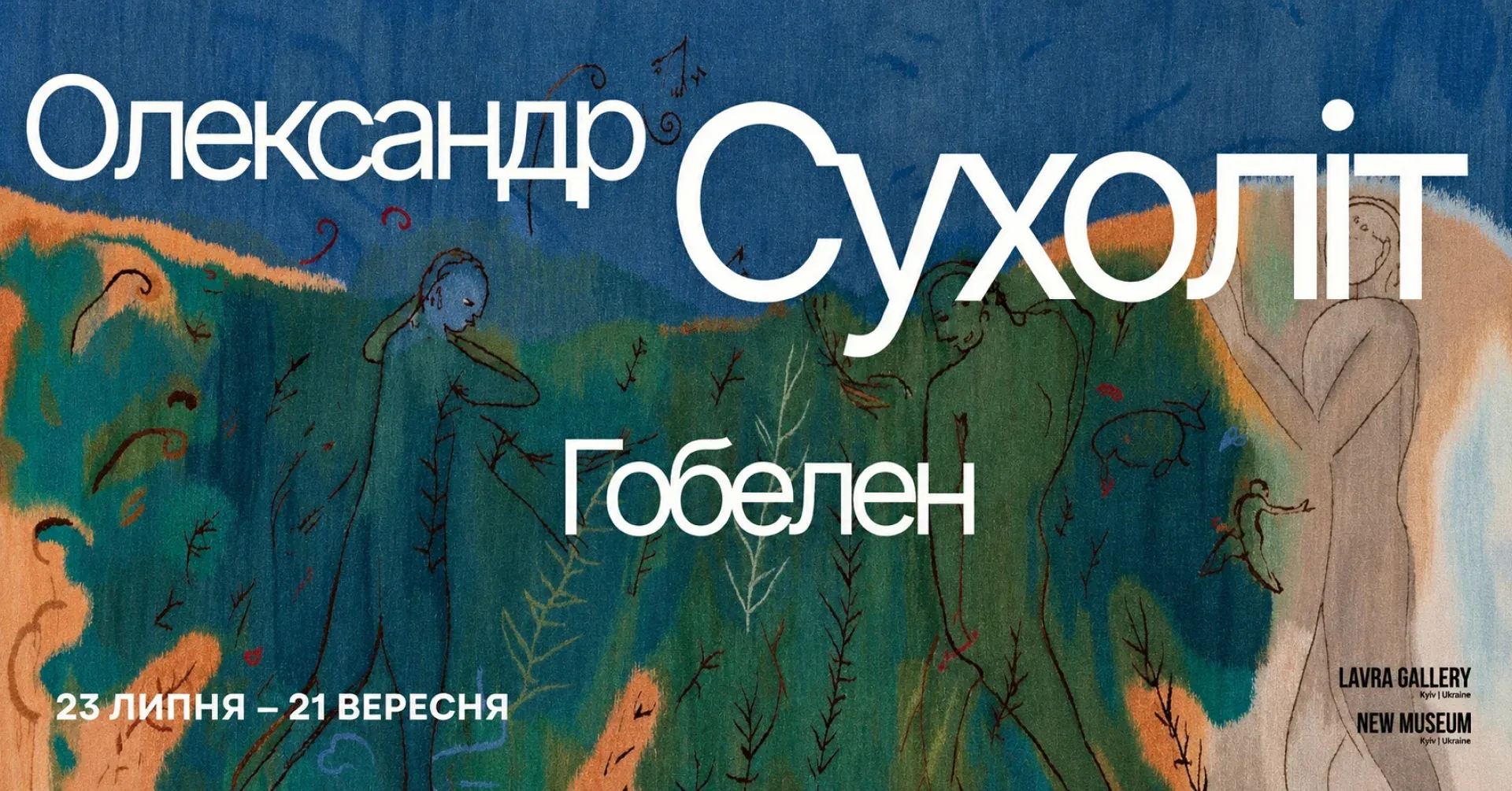
- Dates
- 23 July — 21 September 2026
- Time
- Tue–Sun 12:00–18:00, closed on Mondays
- Venue
- Kyiv City Art Gallery “Lavra”
main hall · 7b Lavrska St - Admission
- Please check with the organiser
About the exhibition
Humankind and the universe, love, family, war and peace — since time immemorial these ideas have been encoded in ornament, made visible in pagan idols, in the terracotta drawings on amphorae, in folk painting — and in tapestries. This is how the culture of our civilisation, its art and philosophy took shape.
Tapestry has never been merely a decorative household object. Using dyes made from natural plants and minerals, wool and silk, the masters of Egypt and Athens created multidimensional works worthy of the finest palaces — and, in time, of museums. In the Renaissance, tapestries turned the paintings of Raphael and Rubens into true luxury.
In the 1950s, Nelson Rockefeller commissioned a tapestry from Picasso based on “Guernica”. Together with the French weaver Jacqueline de la Baume Dürrbach, the artist effectively translated the language of the oil brush into the language of wool and silk threads: the aggressively contrasting painting took on the look of an ancient, noble historical manifesto. Since 1985 this “tapestry of memory” has hung at the United Nations headquarters, at the entrance to the Security Council, reminding diplomats of the horrors of war and the importance of peace negotiations.
Nearby, in the UN’s Blue Hall, hangs another tapestry — “Tree of Life” by the masters of the legendary Reshetylivka factory, whose history in the Poltava region goes back to the Cossack era. Its unique plant ornament turns to the primary sources of inspiration and creativity and symbolises the continuity of the family and the bond between generations — the foundation of the Ukrainian mentality, which no tragedy like Guernica can break.
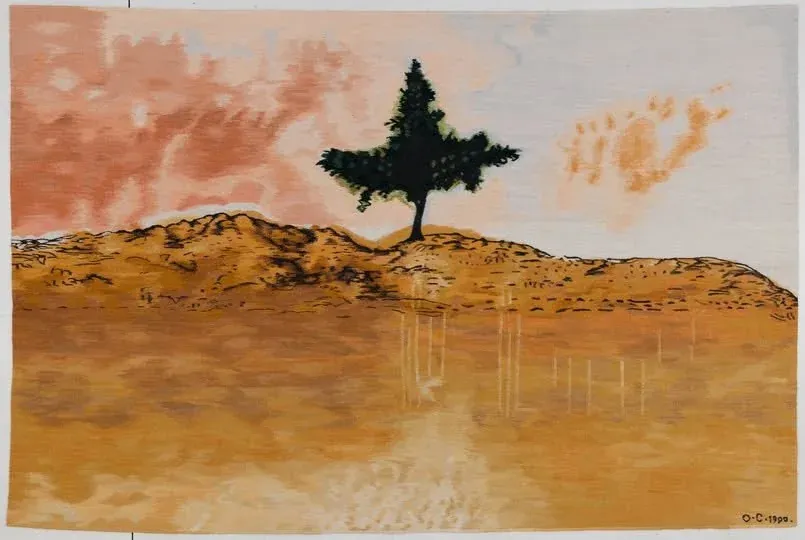
Oleksandr Sukholit continues this thousand-year-old line. A sculptor who thinks in woven surfaces, he works in the tradition of “tapestries of memory” — where Anselm Kiefer works today, with his layers of earth, straw, ash and lead and his canvases woven from myth, history, poetry and metaphysical materials. Sukholit’s tapestries are monumental and expressive, like Renaissance frescoes, and at the same time deeply tactile: texture, stroke, the breathing of the material.
This exhibition is about how one of humanity’s oldest media becomes a tool for exploring the collective unconscious and a primary source for new intellectual searches in contemporary art.